Algorithmic Connections Between Virtual Card Shuffles and Live Betting Recalibrations
Drew Vogel · Jun 2, 2026

Algorithmic Connections Between Virtual Card Shuffles and Live Betting Recalibrations
Electronic card shuffling systems rely on complex algorithms that generate random sequences for games like blackjack and poker while in-match betting platforms adjust odds dynamically based on unfolding events and player data. These two areas share underlying computational structures that process randomness and real-time inputs to maintain fairness and balance across digital environments.
Mechanics of Electronic Card Shuffling
Modern electronic shufflers use pseudorandom number generators seeded with external entropy sources such as hardware clocks or atmospheric noise to produce deck permutations that resist prediction. Operators deploy these systems in online casinos where each shuffle cycle resets card distributions according to regulatory standards set by bodies like the Nevada Gaming Control Board. Research from the University of Nevada's gaming laboratories has documented how these algorithms incorporate multiple layers of hashing to prevent pattern recognition by players or external observers.
Shuffling routines often include cut and riffle simulations that mirror physical handling while operating at speeds far beyond manual capabilities. Data from industry reports shows that electronic systems process thousands of permutations per second to ensure statistical uniformity across millions of hands dealt daily. Those who monitor these platforms note that variance controls embedded in the code maintain return-to-player percentages within tight tolerances even as game volumes scale.
In-Match Betting Recalibration Processes
Live betting platforms recalibrate odds continuously by ingesting streams of match data including player substitutions, weather shifts, and momentum indicators. Algorithms weigh these inputs against historical models to update probabilities for outcomes such as next-goal markets or set winners. Figures from the Canadian Gaming Association reveal that major operators handle recalibration cycles every few seconds during high-profile events to reflect shifting conditions without introducing latency that disrupts user engagement.
These systems integrate machine learning components trained on past matches to forecast adjustments more accurately than static pre-match lines. Observers note that recalibration engines pull from distributed databases containing team performance metrics and injury reports updated in real time. When a key event occurs such as a red card the algorithm rebalances the entire odds structure across related markets to prevent arbitrage opportunities while preserving house margins.
Shared Algorithmic Structures
Both electronic shuffling and betting recalibration depend on entropy management techniques that introduce controlled randomness into deterministic frameworks. Shuffling algorithms generate fresh distributions from limited seed values while betting engines apply probabilistic updates derived from incoming event streams. Experts at research institutions including those affiliated with the Australian Communications and Media Authority have examined how these parallel processes handle uncertainty through layered randomization layers.
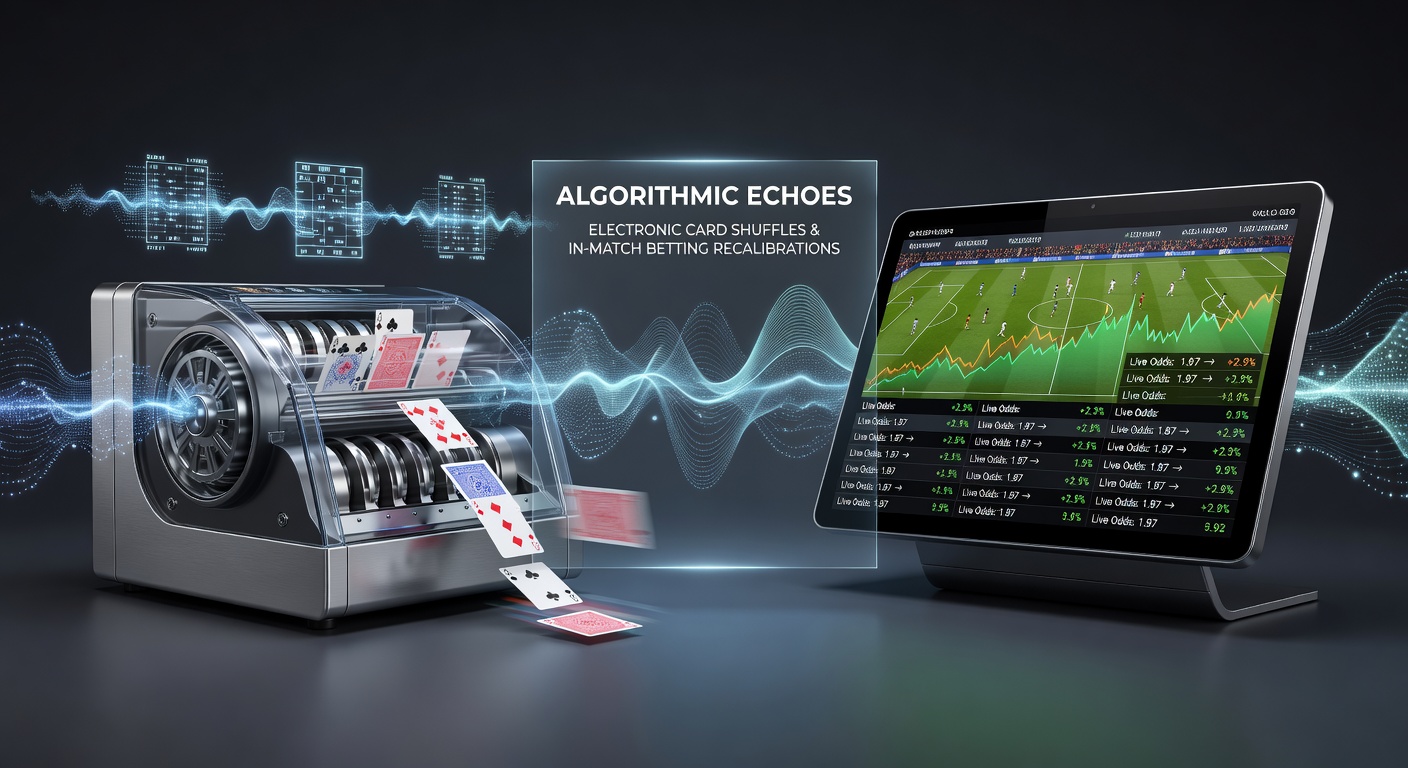
Feedback loops appear in both domains where outputs from one cycle influence subsequent inputs. After a shuffle completes the resulting deck state feeds into game logic that may trigger secondary randomization steps. Similarly recalibrated betting lines incorporate previous adjustment data to smooth transitions and reduce volatility spikes that could affect liquidity. Studies published through academic channels indicate these echo patterns help stabilize user experiences across extended sessions.
Take one platform operator that synchronized its card game backend with sports betting engines to share common entropy pools. The integration allowed variance parameters from shuffling routines to inform risk models used in live odds calculations during June 2026 tournaments. This approach reduced computational overhead while aligning statistical behaviors across product verticals according to internal performance metrics shared with trade groups.
Implementation Examples Across Platforms
Operators in multiple jurisdictions apply similar modular designs where core randomization libraries serve both card games and betting interfaces. One European system documented in technical papers uses a unified random oracle model that supplies values to shuffling sequences and probability recalibrations alike. Those who've reviewed the architecture observe that this reuse simplifies compliance audits because a single verification process covers multiple product types.
Data indicates that such cross-application designs became more prevalent after 2025 updates to international standards governing digital gaming integrity. Platforms handling both verticals report fewer discrepancies in fairness testing results when shared algorithmic components undergo joint validation. This convergence reflects broader trends toward consolidated technology stacks that support regulatory reporting across regions including North America and Asia-Pacific markets.
Conclusion
The algorithmic echoes between electronic card shuffles and in-match betting recalibrations stem from shared needs for secure randomness and adaptive modeling in high-volume digital environments. Industry data continues to highlight these connections as operators refine systems to meet evolving technical and regulatory demands through 2026 and beyond. Further examination of these structures offers insights into how computational methods underpin multiple facets of modern gaming operations without requiring separate development paths for each application area.